Migración y toponimia en los alrededores del Camino
The presence of mobile and piratical societies in medieval Galicia, in particular from northern Europe, is a phenomenon that recurred frequently, sometimes annually, for more than two hundred years since the middle of the 9th century. For a long time, research into this presence was considered sporadic, superficial and of a violent nature. However, research in the last decade has begun to present a more complex side of Viking interactions in the Iberian Peninsula: this interaction had social and political impacts, was not only violent but collaborative, and left traces that may allow us to understand these interactions. In this lecture I will discuss the toponymic trace resulting from the Viking presence around the Camino, exploring how toponymy can tell us about complex (not only violent) interactions and long-term presence in certain regions. I will consider toponymy as a tool for understanding aspects of Viking cultural migration in marginal areas of the Viking diaspora.
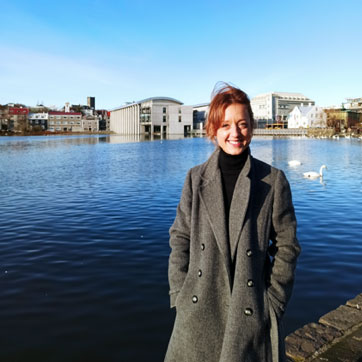
Irene is a María Zambrano postdoctoral researcher at the University of Santiago de Compostela. She holds a PhD in Scandinavian Studies from the University of Aberdeen and is a member of the USC research group SINCRISIS: Investigación en Formas Culturais. Her research focuses on the study of Viking mobile societies in Galicia and south/northeast Scotland, specifically on Viking cultural migration and the imprint of this migration on the archaeological landscape and toponymy.