Os usos sociais do cognomentum na Galicia altomedieval e a posible influencia do Camiño de Santiago
In the context of the progressive densification and social stratification of early medieval Galicia from the 9th to the 11th centuries, the identification of individuals by personal name and patronymic is no longer fully operative and leads to confusion. A new appellative term, or cognomentum, arose, whose function, despite its homonymy, was not exactly the same as that of the cognomentum of classical Latin. In this lecture we will analyse how it arises from hypocoristics, nicknames, geographical origins, personal or professional data; how it is transmitted within the family and/or leaves toponymic traces, how it will give rise to future surnames; the social determinations of its use in a framework of growing lordship in Galician society and the influence that contacts with Islamic culture and with Western Europe (through the pilgrimage to Santiago de Compostela and the Way of St. James) exert on this new model of personal identification. Our perspective will not be so much philological, but from the point of view of the social historian, starting from the premise that each social formation generates its own models of singularisation and collective framing of the individual and the family group.
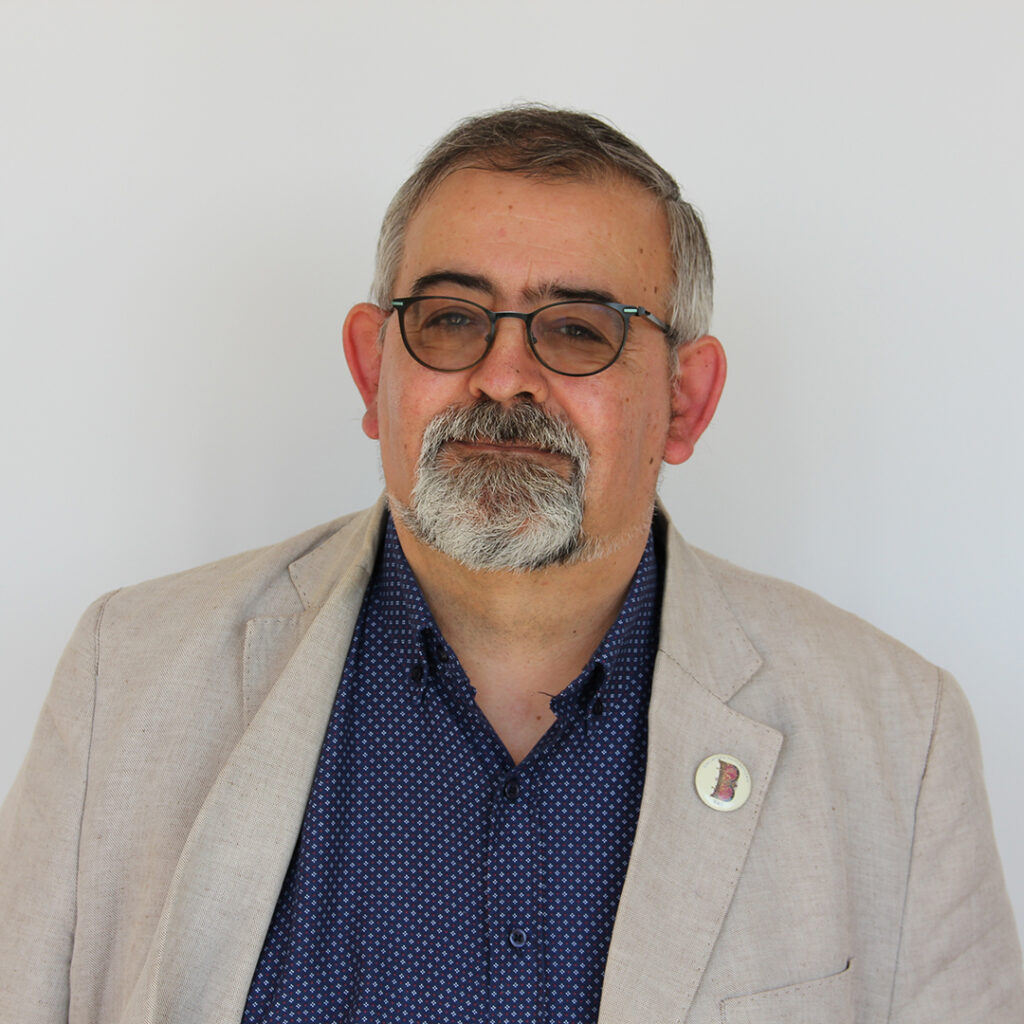
Carlos Baliñas Pérez is Doutor in History and Professor of Medieval History at the University of Santiago de Compostela (Lugo Campus). His main field of research is the Social History of Early Medieval Galicia (700-1100), with the study of the historical landscape, the social projection of Galician medieval urbanism and the origins of the territorial articulation of Galicia as subsidiary lines.